

Biodiversity Enrichment project – the trees we planted in 2026 at Camp Wight!
Outcomes Report
We have planted new trees across the site, in February 2026. Some of them are high amenity species for the campsite: apple and pear trees. Others are native trees which are suitable for the soil and conditions on site, but are not currently present in our woodland.
The trees improve biodiversity, fill in spaces where trees weren’t present, where it has been identified only few species currently live. Other new trees have replaced inappropriate and environmentally poor species and helped to extend the transition from one type of environment to another.
The planting is designed to contribute to the recently adopted publicly developed Local Nature Recovery Strategy (LNRS), which is outlined here: https://www.islandnature.org/
Background
The woodland Camp Wight exists within has been present for hundreds of years. Part of the site has the national designation of Ancient Semi-Natural Woodland (ANSW). This means it has been under continuous woodland cover since 1600AD. More information is available here:
https://www.woodlandtrust.org.uk/trees-woods-and-wildlife/habitats/ancient-woodland
Another part of the site is designated as a Site of Interest for Nature Conservation (SINC), which is a locally managed designation. This designation is outlined here:
https://naturenet.net/status/sinc.html
About 50% of the site is a plantation completed under the Forestry Commission Joining and Increasing Grant Scheme for Ancient Woodland (JIGSAW) scheme, funded by EU Challenge Funds. This woodland filled in missing ‘jigsaw’ pieces in wildlife corridors and expanded ASNW. This expansion of the woodland space around ANSW has helped protect and improve the oldest woodland area on our site.
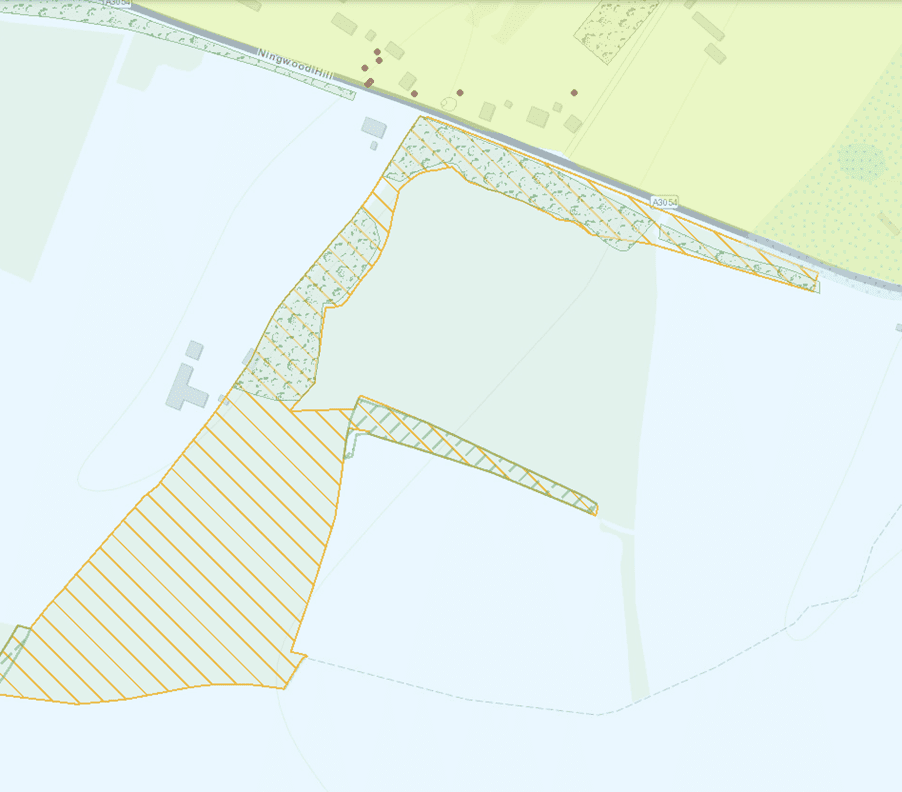
Key
Orange hatching – SINC
Green stripe – ANSW
Green mottled are – Woodland Tree Protection Order
Yellow – National Landscape
Map excerpt from IW Council Core Strategy mapping at: https://iwc.maps.arcgis.com/apps/webappviewer/index.html?id=7e7cfe1b75c3460e91320a9dbb7f5639
As our business relies on the woodland to provide a natural environment to enable our guests to connect with nature, it is essential that we care for this environment in everything we do.
Thomas, the working partner in the business already completes an annual programme to coppice hazel plants around the site. Coppicing is cutting off plants at ground level, for the products in the stems. This cutting off triggers regeneration in the plants and produces sticks and poles used in laying hedges on and off the site, as well as tree stakes and firewood.
Coppicing also keeps the canopy across the site open in rotated sections, every 7-10 years. This ensures more light reaches the ground than in unmaintained woodland. This stimulates a greater variety of ground flora and fauna, improving the biodiversity of the woodland.
Project objectives
Improving woodland age structure By planting new trees we have added a fresh batch of trees, which are a generation younger than those planted in 2002.
Improving biodiversity the new planting has added Small-Leaved Lime and Wild Service trees to the mix in the woodland. The planting outside the woodland, at the edge of the open field has furthered an increase in the transition zone between woodland to grassland and open countryside. This increases the quality and size of the established ANSW habitat.
Mitigating invasive weeds as per Fig.1 multiple Goat Willow plants have been coppiced, with young trees planted nearby, which should out-compete the coppiced willow for light, weakening it naturally.
Trees planted
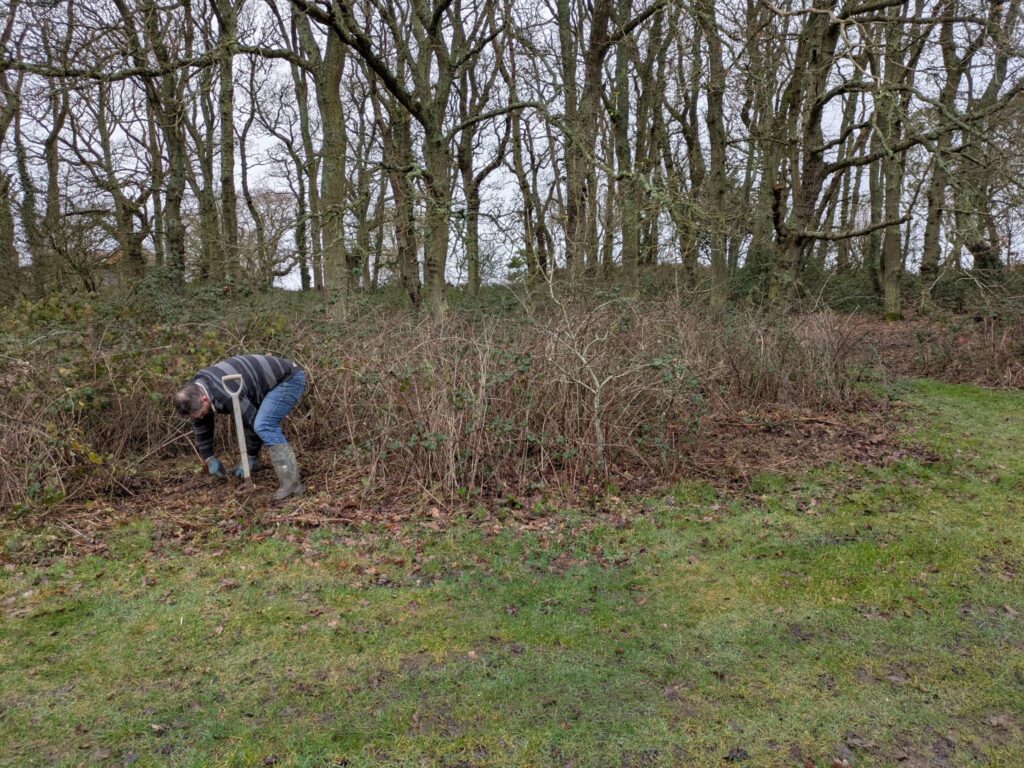
In two areas where there has been bramble-dominated scrub, or a dense Goat Willow canopy we have coppiced the willow and cut the existing scrub. We have planted three Wild Service and five Small Leaved Lime trees. These have been chosen as they prefer heavy soils and are tolerant of poor drainage.
The scrub has been strimmed to clear the ground, to minimise competition in the first few years of the trees establishing in these areas. At Camp Wight we have terminated use of ‘line trimmers’. These use sacrificial nylon line to cut grass and scrub. This is environmentally unsustainable and we view it as a practice that should be banned completely, as other alternatives are available. In this situation we used an Oregon Mulching blade to clear the scrub in the planting areas.We have added fruiting hazels, with fruit trees, which provide nuts for the red list species on site: Hazel Dormice and Red Squirrels.
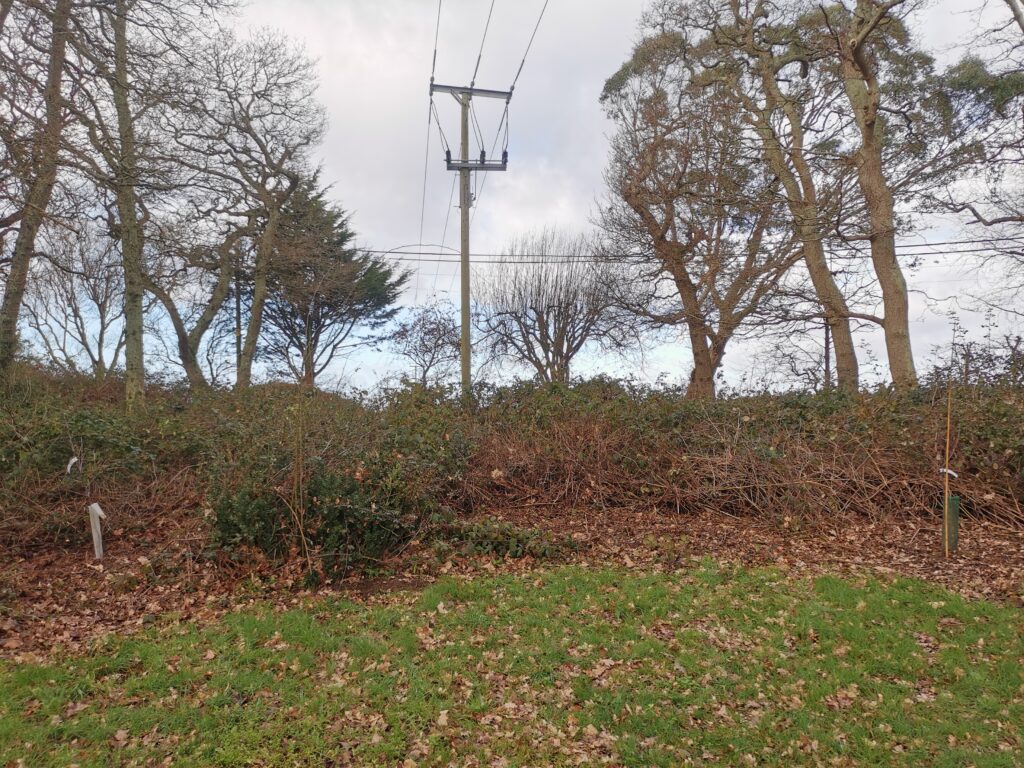
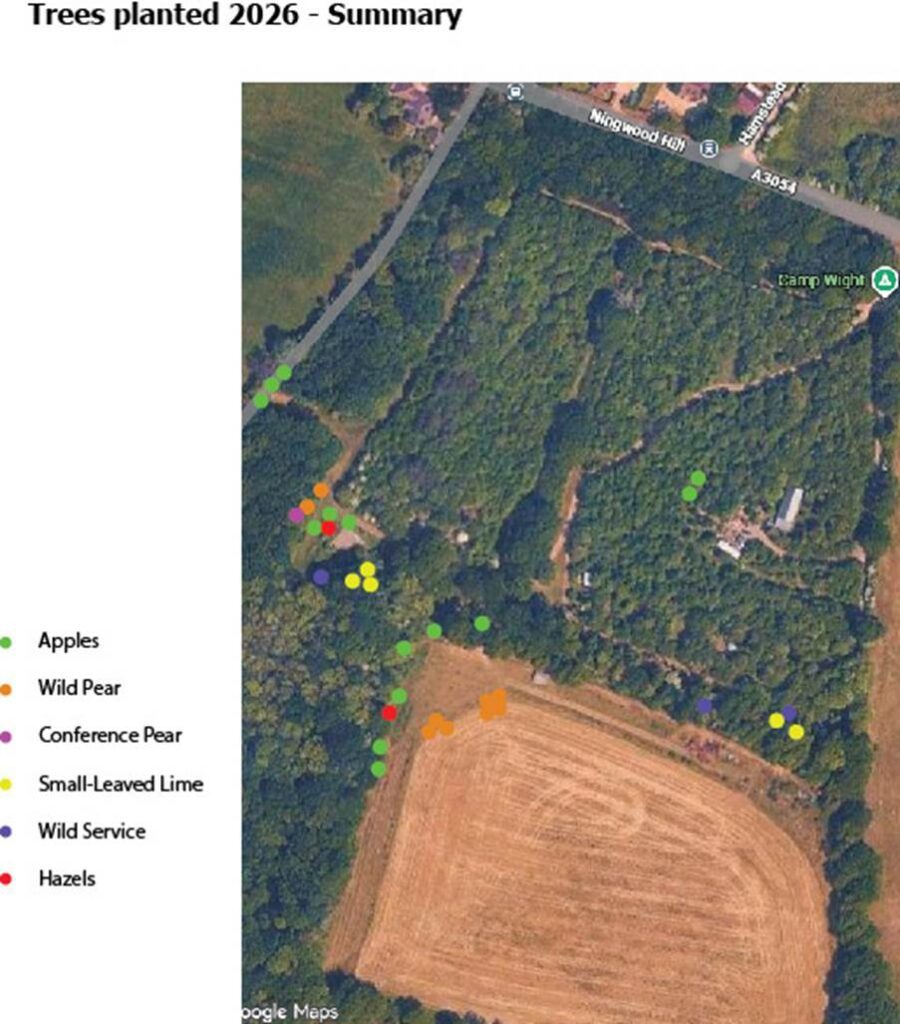
Around the edge of camping pitches we have planted 15 new apple and pear trees. This includes adding a couple of new pear trees next to a lonely pear tree next to the footpath, which has never fruited (pictured, below).
These new pear trees should pollinate the original one, which will allow it to fruit for the first time. We will monitor this through 2026 and 2027. This is because pear trees flower through a range of dates. We don’t currently know the flowering date of the existing pear, so it may be we need to add more pears, of the right fruiting date, in addition to the wild Conference pears planted around the existing tree.
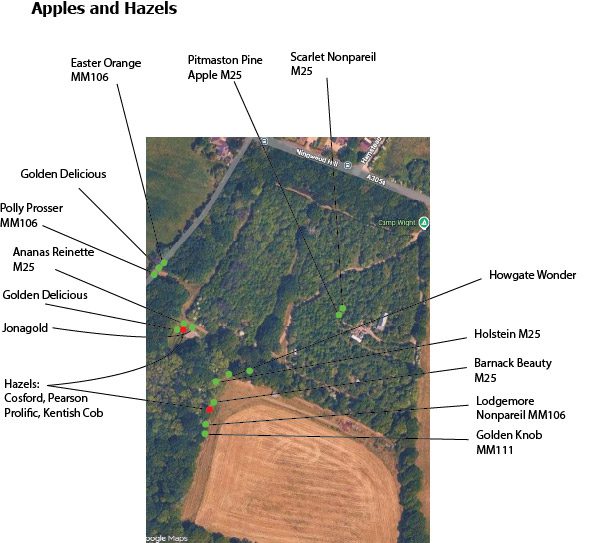
Varieties of the apple and pear trees are a mix between lower cost trees, such as Golden Delicious and Conference and some locally significant varieties including Howgate Wonder and Steyne Seedling, which were developed on the Isle of Wight.
The fruit trees have been planted on full-size and semi-dwarfing root stocks, to ensure they are good-sized trees.
Map of Apple Varieties and rootstocks and Hazel Planting
Map of all trees
Ongoing tasks
A big part of our site management is caring for the trees and shrubs in the woodland. These new trees and shrubs will fall in to our management practices and be looked after for many years in to the future. This will include watering and mulching in drought periods and formative pruning for the fruit trees to ensure they are as productive and healthy as possible.
Project difficulties and opportunities
We have lots of experience in planting and nurturing trees and shrubs on the site and ensuring we plant appropriate species and look after them whilst they establish.
Difficulties are likely to be focused around ensuring the trees thrive in the weather conditions we see as the climate changes. We now experienced heavy rainfall, heatwaves and drought in the summer. These risks have been mitigated with choice of appropriate species, to plant trees which thrive in wet conditions, as we have soils that retain moisture much longer than most.
Mulching with shredded material from around the site will keep the trees wetter for longer in the summer, hand watering during droughts will protect the trees from water shortages, even with hosepipe bans. We have also used minimal protective guards protects against the plants being ‘burnt off’ in heatwaves, which is a risk with tall and full tree shelters. Our experience is that we do need limited guarding, particularly on fruit trees, as rabbits tend to ‘ring-bark’ trees that are unguarded. This is where all of the bark is chewed off around the stem. The bark is where nutrients are carried up and down the tree, so this damage is normally terminal.
Legacy
Planting trees on our site, which already sequesters approximately 42 tonnes of carbon per year ensures we build on that sequestration and improve the shady environment with resilient trees which will provide amenity and fruit for many decades in the future, as well as improving the biodiversity of the site for future generations, with native species, which were previously missing from the species on site.
Do check availability to stay with us through the year and see what’s flowering, or fruiting!